An Easy Identification by Josh Palumbo, Forest Management Coordinator.
Fielding questions on tree problems is a part of my job I enjoy quite a bit. I get to stay abreast of the happenings in the forest and in the process learn new things all the time. I am even more fortunate when the cause of these questions is an easy culprit to identify. This edition of the Nine Minute Naturalist will feature one of my favorite birds, the yellow-bellied sapsucker and the tell-tale calling card this woodpecker leaves behind.
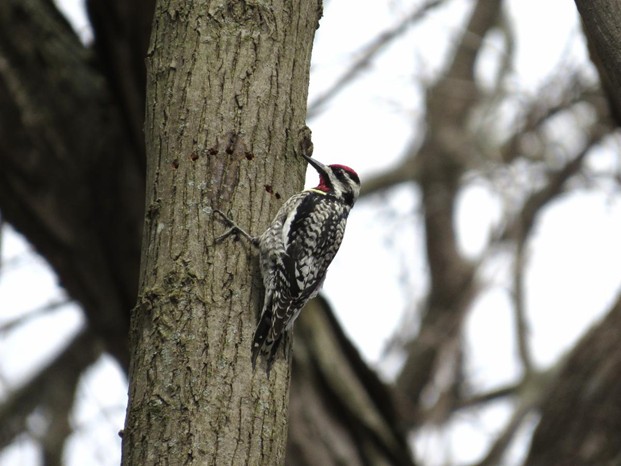
Virginia is home to eight different woodpecker species. They are all considered residents (meaning they do not migrate in the winter) except the yellow-bellied sapsucker. This adorable little woodpecker prefers Virginia once our leaves have fallen and the cold days of winter arrive. These winter migrants are similar in appearance to the downy and hairy woodpeckers which are two of our most seen winter residents. Their attire is similar in that all sport black and white molted feathers. Male sapsuckers will have a red crown and red throat while the females sport just the red crown. Their name comes from a pale-yellow belly that can be hard to see from distance and does not exist in juveniles, which have a more brownish belly color. While you may get fortunate enough to spy this bird flying from tree to tree, you are more likely to hear them in the winter woods. When you hear a “mewing” cat-like noise, you have a sapsucker nearby.
https://www.allaboutbirds.org/guide/Yellow-bellied_Sapsucker/sounds
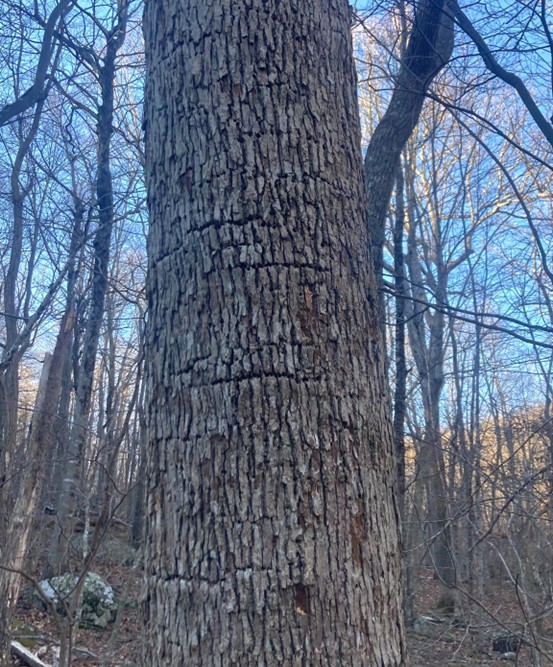
What differentiates yellow-bellied sapsuckers from other woodpeckers in the forests of Wintergreen is their feeding preferences. Instead of drilling for tasty insects, the sapsuckers are taping the tree for its sweet sap. Once they have chosen a tree, the woodpecker will drill and maintain sap wells to ensure continuous flow. These wells are made in horizontal rows around the tree trunk and are the distinct “calling card” of this species. The sapsuckers supplement their diet by feeding on insects and fruit.
My expertise is sought due to the tree disfigurement and the obvious questioning the trees health. The key question is what affect the yellow-bellied sapsucker has on the health of a tree. The answer (for most tree health questions) is the always disappointing…it depends. If the sap wells are drilled into a healthy sugar maple tree, there will be not detrimental damage caused by the woodpecker. If the tree is in decline, any new disturbance will exasperate the current problems. Excessive number of wells on a tree in poor health will certainly invite fungal growth and disease. It also sometimes attracts other insects which further the damage in extreme cases.
The trails that would offer the best opportunity to possibly find a yellow-bellied sapsucker are Hemlock Springs, Upper Shamokin Gorge, and the Upper Shamokin Falls. This woodpecker seems to favor maples, birch, basswood, and serviceberry. Each of these species can be found in relative abundance on these trails.
I always love to find answers to natures unique questions especially when they are as easy as yellow-bellied sapsucker holes. Keep an eye out for their tell-tale sign as you walk along your nearby hiking trail. Also, if you hear a “cat’s meow” up in the tree, you are probably within sight of our winter visitor, the yellow-bellied sapsucker.