A Face Full of Spiderweb by Josh Palumbo, Forest Management Coordinator
I have a love/hate relationship with curse words. While I do not prefer them in everyday speech, they serve a purpose few words can fill. Stubbing your toe on a wooden bed frame first thing in the morning or hearing the “click, click” of a dead battery failing to start your car when you need to be somewhere soon, are just a couple examples of perfect application for a bit of profanity. Another spot I reserve for uncouth language is walking face first into spider webs. We have officially entered spider season and we must find beauty in the many spectacular spiders we can find sitting amongst lovely webs. This Nine Minute Naturalist will delve into the world of the orb weavers of Wintergreen.
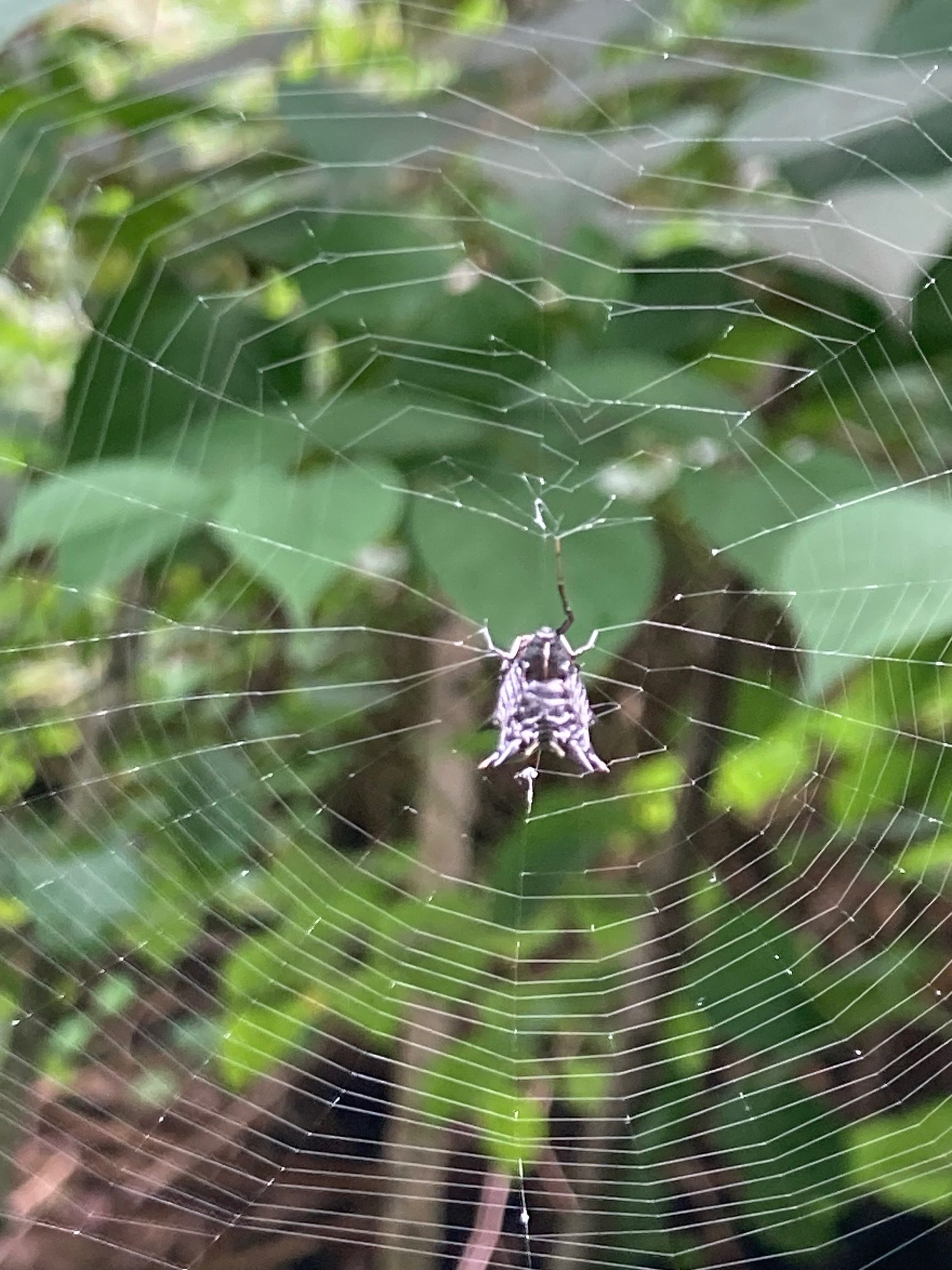
The most common member of the orb weaver family is the spined micrathena. This spider begins annoying hikers in the heat of July and persists well into October. This mostly black spider is easily identified by the angular abdomen. They are a member of the spiny orb weavers’ group and are generally woodland spiders that love to build nests across the trails of Wintergreen. Our trails or any other opening in the forest floor act as fly ways for insects and thus tend to attract the interest of their predators. Their hard spiny body is most likely a defense against predation as it would make a less-than-ideal meal going down the throat of a larger predator. This spider is harmless to humans but does a great job decreasing the fly populations at Wintergreen.
The most striking spider to run into on the trail is the marbled orb weaver. This member of the orb weaver family is identified by an orange head and upper legs, black and white banded lower legs, and a marbled abdomen. These large spiders are found primarily in the woodland realms of Wintergreen especially on the forest edges. When their head high webs are disturbed, the marbled orb spider tends to get to cover on the ground and stay hidden until danger passes. They can also be found on the edges of their nest in a folded leaf, as they wait for prey to get tapped in their webs. Marbled orb weavers are most common in late August to late October. This spider is also called the “Halloween” spider due to both its orange color and the females being commonly found on the ground preparing to lay eggs around Halloween. Though harmless to humans, these spiders act as great “organic” pest control.
Another common spider found amongst our landscaped environment at Wintergreen is the black and yellow garden spider. This large spider, identified by its black and yellow coloring on the abdomen, is found more commonly in our landscape settings but is occasionally found in the woods. The black and yellow garden spider makes nests around knee to waist height with a distinct thick silk strand that zigzags down the middle of the nest. This attribute of their web making has earned the nickname, the “writing spider.” Although the large size of this spider is a bit intimidating, it is harmless to humans and does flee when disturbed.
I love being out in the woods first thing in the morning but that will come with a price from now until October. That price is a face full of spider web. Feel free to exclaim your favorite inappropriate word as you dive backwards and begin frantically clearing web from your face because this is what those words were created for. Do not waste you allotted language vices on everyday use. Just save them for your next visit to a trail at Wintergreen.